Fotobestand Eugenie Goldstern – forschendes ethnografisches Fotografieren
Der im Volkskundemuseum Wien bewahrte fotografische Nachlass von Eugenie Goldstern (1883/84–1942) umfasst rund 470 Aufnahmen und zählt zu den frühen Beständen ethnografischer Feldforschung. Zwischen 1913 und 1921 dokumentierte Goldstern in den Alpenregionen Frankreichs, Österreichs und der Schweiz Architektur, Alltagsleben und materielle Kultur. Ergänzt durch Aufnahmen aus Ägypten und Osteuropa spiegeln ihre Fotografien den Übergang von der Sammlung zur wissenschaftlichen, respektvollen Beobachtung – in einer Zeit, in der Volkskunde noch stark normativ und hierarchisch geprägt war. Etwa zwei Drittel der Bilder des Nachlasses stammen von ihr selbst; ein bemerkenswert hoher Anteil, der die aktive fotografische Praxis dieser frühen Ethnologin, die 1942 als jüdisch Verfolgte im NS-Vernichtungslager Sobibor ermordet wurde, belegt. Nach Jahrzehnten des Vergessens wurde Goldsterns Bestand ab 2018 vollständig erschlossen, konserviert und digital zugänglich gemacht. Heute ist er über die Online Sammlung Plus gemeinsam mit ihren Publikationen, Archivmaterialien und Literatur zu ihrer Person zugänglich und bietet damit erstmals eine umfassende Quelle zu Methode, Biografie und Forschungsgeschichte.
BEGINNEN – Frühe Jahre, erste Sammlung
Nach den antijüdischen Pogromen im zaristischen Russland verließ Eugenie (Jenny) Goldstern (geboren 1883 oder 1884) mit ihrer Familie Odessa und kam 1905 nach Wien. Dort studierte sie am Institut für Volkskunde als eine der ersten Frauen, die sich in Österreich der jungen Disziplin der europäischen Ethnologie widmete. Aufgrund ihrer Staatsangehörigkeit war sie jedoch nur als Gasthörerin zugelassen.
Zwischen akademischem Aufbruch und musealer Praxis entwickelte sich früh ihr forschender Blick für eine rurale Alltagskultur, die in ihrer Zeit als „verschwindend“ galt. Bald stand sie in engem Austausch mit dem Museum für österreichische Volkskunde. Ihr Lehrer Michael Haberlandt – Gründungsdirektor des Museums und Dozent am Institut für Volkskunde – bezog sie früh in die praktische Museumsarbeit ein. 1911/12 trat sie dem Verein für Volkskunde bei und arbeitete an Inventarisierungen und Ausstellungsprojekten mit, etwa zur Baskenland-Kollektion von Rudolf Trebitsch (siehe Album „Zwischen Grönland und Sardinien – Der fotografische Bestand von Rudolf Trebitsch“). Die Zeitschrift für österreichische Volkskunde würdigte 1912/13 die „mit besonderem Eifer“ zusammengetragene Sammlung ihrer ersten Forschungsreise, deren Objekte sie dem Museum übergab (o.A. 1912: 199, o.A. 1913: 259).
Mit ihren ersten Schenkungen an die „Photographien- und Bildersammlung“ des Museums (1912) knüpfte Goldstern zunächst an die damaligen Sammlungsschwerpunkte an: Architektur und religiöse Volkskunst in Galizien (z. B. AÖMV/1792-1794) sowie Kirchenbauten in Russland (pos/2704–2710). Noch waren es nicht ihre eigenen Fotografien, sondern ausgewählte Ansichtskarten und Zeitungsausschnitte – zusammengestellte visuelle Zeugnisse jener kulturellen Lebenswelten, die das Museum zu bewahren suchte (Goldstern 1922).
ERFORSCHEN – Reisen, Studium, Feldforschung
Auf ihre frühe Sammlungs- und Museumstätigkeit folgte eine Phase intensiver wissenschaftlicher Arbeit mit eigener Feldforschung und fotografischer Praxis. 1914 führte sie ihr Weg in die Schweiz, wo ihr – im Gegensatz zu Wien – ein reguläres Studium möglich war: an der Université de Neuchâtel bei dem Ethnologen Arnold van Gennep (1873–1957), einem der prägenden Vertreter einer kulturvergleichenden Volkskunde. Die Promotion erfolgte 1920 bei Paul Girardin an der naturwissenschaftlichen Fakultät der Universität Fribourg.
Während ihrer Schweizer Jahre unternahm Goldstern mehrere Forschungsreisen, die für ihre spätere Arbeit grundlegend wurden. Einige lassen sich aus dem fotografischen Bestand des Volkskundemuseum Wien rekonstruieren. So hielt sie sich 1913 bis 1914 in den französischen Alpen auf, in Savoyen und im Piemont mit den Gemeinden Bessans, Bonneval, Avérole, Ribon und den Bauges (Goldstern 1921, 1922). 1914 reiste sie nach Ägypten, 1916 in die Alpenregionen von Salzburg (Abtenau, Lammertal und Umgebung; Goldstern 1918) und 1919 bis 1921 schließlich innerhalb der Schweiz nach Graubünden, ins Münstertal und ins Wallis, mit Stationen in Cierfs, Valchava und Alp Sot (Goldstern 1922, 1924).
Wonach sie suchte, zeigt eine unscheinbare Postkarte, die sie während ihrer Ägyptenreise 1914 an ihren Doktorvater van Gennep schrieb, aber nie abschickte (AÖMV/2764). Ihr Blick galt nicht dem Spektakulären, sondern dem Leben der Menschen und ihrer Alltagskultur: „Monsieur, me voilà dépuis [sic!] 3 semaines en Égypte [...] Malheureusement je n’avais pas beaucoup de temps pour visiter ces villages si intéressants, car tout le monde pendant tels voyages ne s’intéresse que pour les monuments historiques.“1 Offenbar handelte es sich um eine begleitete Studienreise (möglicherweise die Wiener Universitätsreise 1914), bei der sie kaum Gelegenheit hatte, eigene Wege zu gehen – anders als bei ihren Feldaufenthalten in den Alpenregionen.
FOTOGRAFIEREN – Ethnografie im Bild
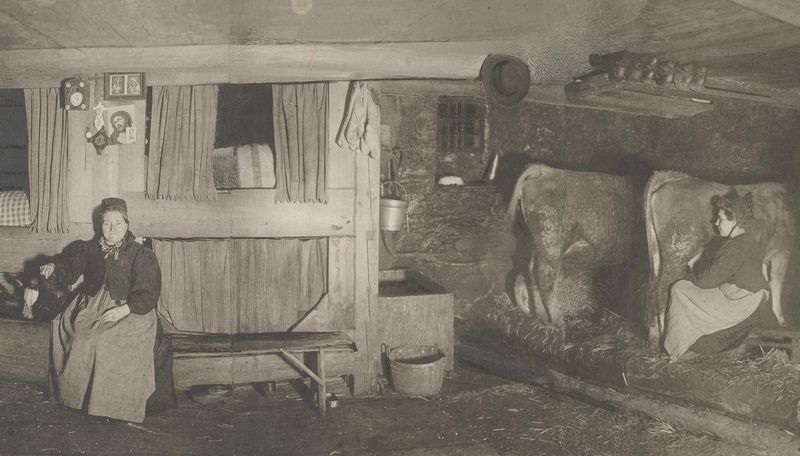
Die Alpen wurden zum Schwerpunkt von Goldsterns Forschung und zum wichtigsten Ort ihres fotografischen Arbeitens. In Bessans, einem Hochgebirgsdorf in der Savoyer Maurienne, entstand 1913/14 ihr umfangreichster fotografischer Bestand (Goldstern 1922). Ihre Aufnahmen zeigen das Leben und die Architektur mit präzisem ethnografischem Blick: Menschen bei der Feldarbeit (dia/655–665), in regionaler Tracht (dia/620), Kinder beim Spielen (dia/621), Tiere, Innenräume und Häuser (ab dia/641). Daneben fotografierte sie Objekte, die später in die Museumssammlungen eingingen – Holzspielzeug, Werkzeuge, Hausgeräte und Kleidung (z. B. pos/4501–4506). Ein spezifisches Beispiel ist das Salzfässchen mit der Inventarnummer ÖMV/32656, abgebildet im Positiv pos/3489.
Die Motive aus Bessans stehen exemplarisch für ihren gesamten fotografischen Nachlass. Etwa 80 Prozent der Aufnahmen widmen sich Architektur und Alltagsleben, die übrigen zeigen Objekte, Bräuche und Landschaften. Zwei Drittel des Bestands stammen aus den französischen Alpen, die anderen verteilen sich auf das Salzburger Land, die Schweiz sowie auf Ägypten und Osteuropa.
Ihre Arbeitsphasen spiegeln sich auch in der Wahl des fotografischen Mediums: Für ihre frühen Studien zu Osteuropa und Ägypten griff Goldstern auf Ansichtskarten und Drucke zurück. Im Rahmen ihrer Dissertation über die Schweiz entstanden Negative als wissenschaftliches Arbeitsmaterial. Für ihre Vorträge zu Bessans ließ sie technisch anspruchsvolle Diapositive anfertigen, die sie selbst präzise beschriftete und dokumentierte (ab dia/620).
Rund zwei Drittel aller Objekte dieses Fotobestandes stammen von Goldstern selbst. Der große fotografische Bestand, etwa ein Drittel ihrer gesamten Sammlung im Museum, verdeutlicht die zentrale Rolle, die das Bild in ihrem Forschen spielte. Die Mischung aus dokumentarischer Genauigkeit und persönlichem Blick unterscheidet ihre Fotografien von denen vieler Zeitgenossinnen und Zeitgenossen. In ihrer Bessans-Studie 1922 beschreibt sie einleitend, wie sehr sie auf Einleben, Zurückhaltung und aufmerksame Beobachtung setzte. Entsprechend wirken ihre Bilder nicht inszeniert, sondern beobachtend und empathisch; sie zeigen Nähe statt Distanz (Goldstern 1922). Diese Haltung war bemerkenswert in einer Zeit, in der Volkskunde häufig noch stereotyp-normierend und hierarchisch dachte und arbeitete.
PUBLIZIEREN – Text und visuelle Forschung
Goldstern verband Text, Objekt und Fotografie zu einem neuen ethnografischen Format. Ihre Dissertation „Bessans. Volkskundliche monographische Studie über eine savoyische Hochgebirgsgemeinde“ (1922) und ihre „Beiträge zur Volkskunde des bündnerischen Münstertales“ (1922; siehe neg/12362–12406) zeigen diese Arbeitsweise ebenso wie ihre früheren und späteren Aufsätze: „Beiträge zur Volkskunde des Lammertales“ (1918), „Das Haus von Bessans“ (1921) und „Alpine Spielzeugtiere“ (1924; siehe dia/876). Die Fotografien begleiten ihre Texte, erläutern Beobachtungen und helfen, ihre Forschung anschaulich zu vermitteln.
ZWISCHEN AUSLÖSCHUNG UND ERINNERUNG – Nachleben einer Forscherin
Nach ihrer Rückkehr nach Wien versuchte Goldstern, am Museum beruflich Fuß zu fassen – vergeblich (siehe Schriftverkehr im Teilnachlass Eugenie Goldstern). Aus antisemitischen und rassistischen Gründen verweigerte ihr der damalige Direktor Arthur Haberlandt eine Anstellung (Ottenbacher/DÖW, o.A./biografiA). Dennoch überließ sie dem Museum einen großen Teil ihrer Sammlung und unterstützte es finanziell erheblich – ein Ausdruck tiefer Loyalität gegenüber dem ethnografischen Denken, das sie verkörperte, und dem Vertrauen in die Bewahrung ihrer Arbeit.
Diese Loyalität ist im Rückblick schwer zu fassen. 1942 wurde Eugenie Goldstern über Lublin in das Vernichtungslager Sobibor deportiert und ermordet (Ottenbacher/DÖW). Ihre wissenschaftlichen Arbeiten gerieten in Vergessenheit und mit ihnen lange auch ihr fotografisches Werk.
Erst rund 25 Jahre nach ihrem gewaltsamen Tod lassen sich erste Spuren einer Auseinandersetzung mit ihrer Arbeit finden: 1967 griff eine vergleichende Exkursion mit Studierenden der Universität Zürich unter Arnold Niederer Goldsterns Bessans-Studien wieder auf (Niederer 1970); einen wichtigen Impuls dazu gab Klaus Beitl, der auf ihre Dissertation aufmerksam machte. 1968 präsentierte die Ausstellung „Französische Volkskunst“ im Schlossmuseum Gobelsburg ausgewählte Savoyen-Objekte aus ihrem Bestand (Beitl 1968). Eine weiterreichende und systematische Auseinandersetzung setzte jedoch erst in den 2000er Jahren ein: Die Ausstellung „Ur-Ethnographie. Auf der Suche nach dem Elementaren in der Kultur“ im Österreichisches Museum für Volkskunde, begleitet von einer Reihe wissenschaftlicher Publikationen (Grieshofer, Pallestrang & Witzmann 2004; Verein für Volkskunde 2005), stellte Goldsterns Forschung 2004 erstmals in einen größeren Zusammenhang. 2007 folgte die Ausstellung „Eugénie Goldstern (1884–1942). Être ethnologue et juive dans l’Europe alpine des deux guerres“ in Chambéry und Grenoble, die ihre Arbeit auch im europäischen Kontext verortete (Duclos & Lutin 2007). Die Publikation „Vienna’s Shooting Girls. Jüdische Fotografinnen aus Wien“ würdigte sie ausdrücklich als Fotografin (Meder & Winklbauer 2012).
BEWAHREN – physisch und digital
Nach dem verstärkten Interesse an Eugenie Goldstern in den frühen 2000er Jahren, als einzelne Fotografien aus dem Bestand für Publikationen oder Ausstellungen angefragt und dabei teils aus dem Zusammenhang gerissen wurden oder verloren gingen, folgte erneut Stille. Über ein weiteres Jahrzehnt blieb Goldsterns fotografische Sammlung unbeachtet: keine Bearbeitung, keine Sicherung, keine Ordnung.
Erst 2018 begann eine umfassende Aufarbeitung – aus Respekt vor der Forscherin und ermöglicht durch neue personelle Ressourcen (Hammer 2020). Jedes Glasdia, jedes Positiv, jedes Negativ und jede Ansichtskarte wurden gesucht, gesichtet, geordnet, verzeichnet und konservatorisch gesichert. Seither bildet der fotografische Bestand von Eugenie Goldstern einen eigenständigen Teil der Fotosammlung des Museums.
Bis zur vollständigen Digitalisierung vergingen weitere Jahre. 2023/24 wurden im Rahmen der ersten Förderschiene „Kulturerbe digital“ des Bundesministeriums für Kunst, Kultur, öffentlichen Dienst und Sport BMKÖS rund 470 Fotografien digitalisiert, mit Metadaten versehen und systematisch erschlossen. Heute ist der gesamte Fotobestand über die Online Sammlung Plus zugänglich – gemeinsam mit Goldsterns Publikationen, Archivmaterialien und Forschungsliteratur zu ihrer Person. So wird ihr Werk erstmals in einem größeren Zusammenhang sichtbar und als Quelle für Methode, Biografie und Forschungsgeschichte nutzbar.
BEDEUTUNG HEUTE – Forschung, Haltung, Vermittlung
Im heutigen Kontext des Museums gewinnen Goldsterns Fotografien neue Relevanz. Sie verbinden materielle Kultur und visuelle Ethnografie, die Anfänge wissenschaftlicher Feldforschung mit der Gegenwart digitaler Sammlungspraxis. Mehr als hundert Jahre nach ihrer Entstehung eröffnen sie neue Perspektiven auf das Sehen, Sammeln und Bewahren und darauf, wie Forschung und Haltung untrennbar verbunden sind. Was in ihren Fotografien sichtbar wird – der genaue, respektvolle und teilnehmende Blick – bleibt ein Maßstab für museale Forschung und Vermittlung.
Astrid Hammer
Kuratorin der Fotosammlung
12. November 2025
1 „Herr, ich bin nun seit drei Wochen in Ägypten [...] Leider hatte ich nicht viel Zeit, diese interessanten Dörfer zu besuchen, denn auf solchen Reisen interessiert sich jeder nur für die historischen Monumente.“ (Übersetzung)
Literatur:
Einen umfangreichen Anhang mit Quellen finden sie hier.